Eggs and hatching
A finished nest plus a paired adult is what starts an egg; while it incubates the parents keep the site supplied with food, and the hatch produces a chick that another player can play as.
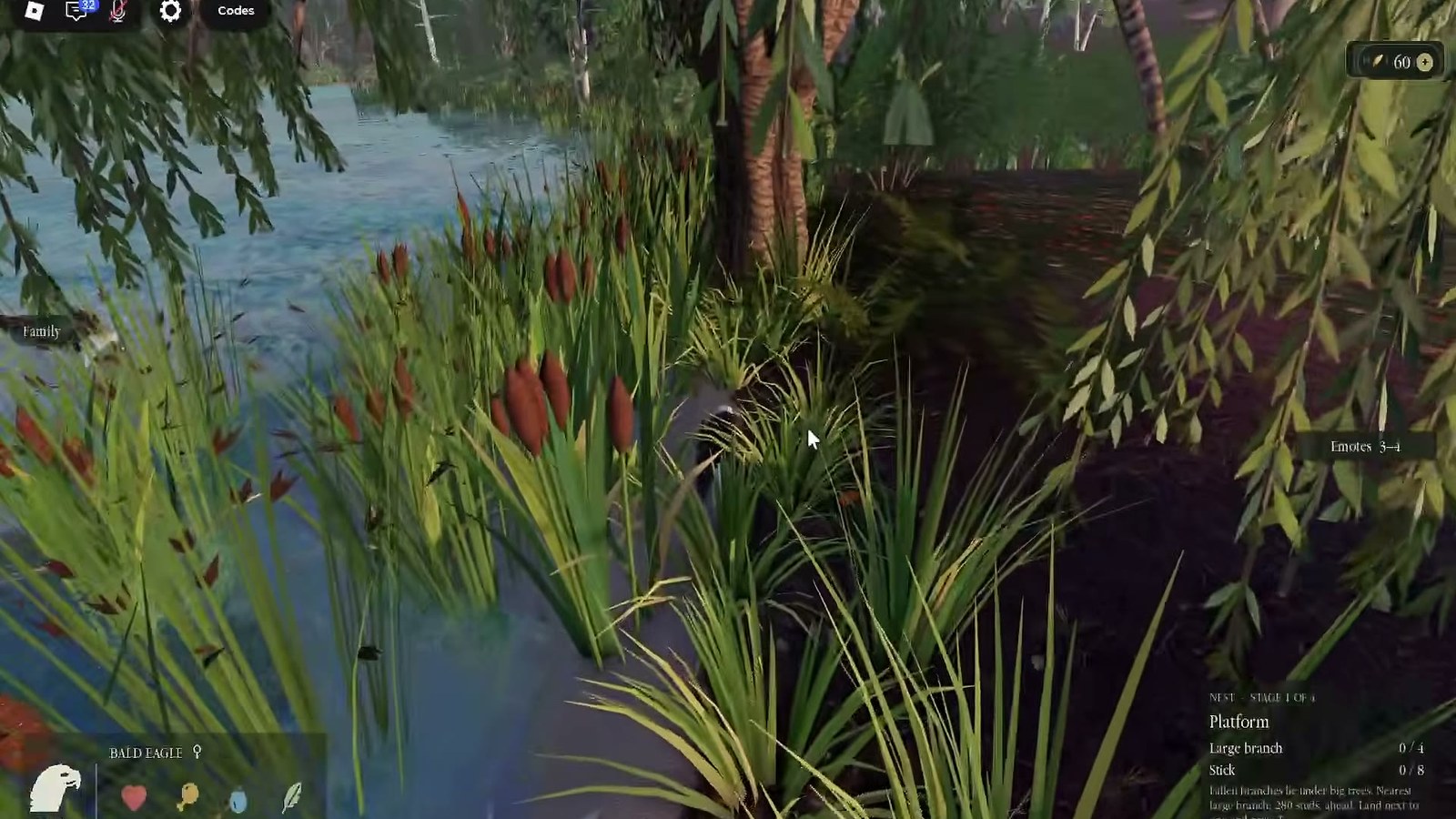
Eggs are the hinge of Broodwing's loop: they are what turns two adult birds into a family, and what gives a new player something to be. Most sites split this into four thin pages about eggs, incubation, hatching and nests. This one page covers the whole stage, because in the game it is one continuous thing - a finished nest, a paired pair, an egg, then a chick.
What has to be true before an egg appears
Three conditions sit in front of the egg, and all three are about the adults rather than the egg itself.
- You are an adult. Chicks do not lay eggs; the game's own description separates hatching as a chick from growing up into an adult, and only the adult end of that cycle nests.
- You have a nest. The egg belongs to a nest site. Building first and pairing second is the order that works, because a pair with nowhere to lay will spend the session looking for a site.
- You are paired. The family is the unit that raises the clutch; a solo bird can build and hunt, but the egg stage is a two-adult job in practice because somebody has to stay with the nest.
The egg stage, step by step
| Phase | What is happening | What you should be doing |
|---|---|---|
| Nest finished | The site exists and is yours | Fly the pond-to-nest line once so you know the route |
| Pair formed | Two adults share the site | Agree who hunts and who stays; do not both leave |
| Egg laid | The clutch exists at the nest | Keep food coming in; the nest should never be unattended for long |
| Waiting | The egg sits while the parents work | Use the time to stock the nest and learn the approach |
| Hatch | A chick appears and can be played | Feed it immediately; a new chick is the most vulnerable thing in the game |
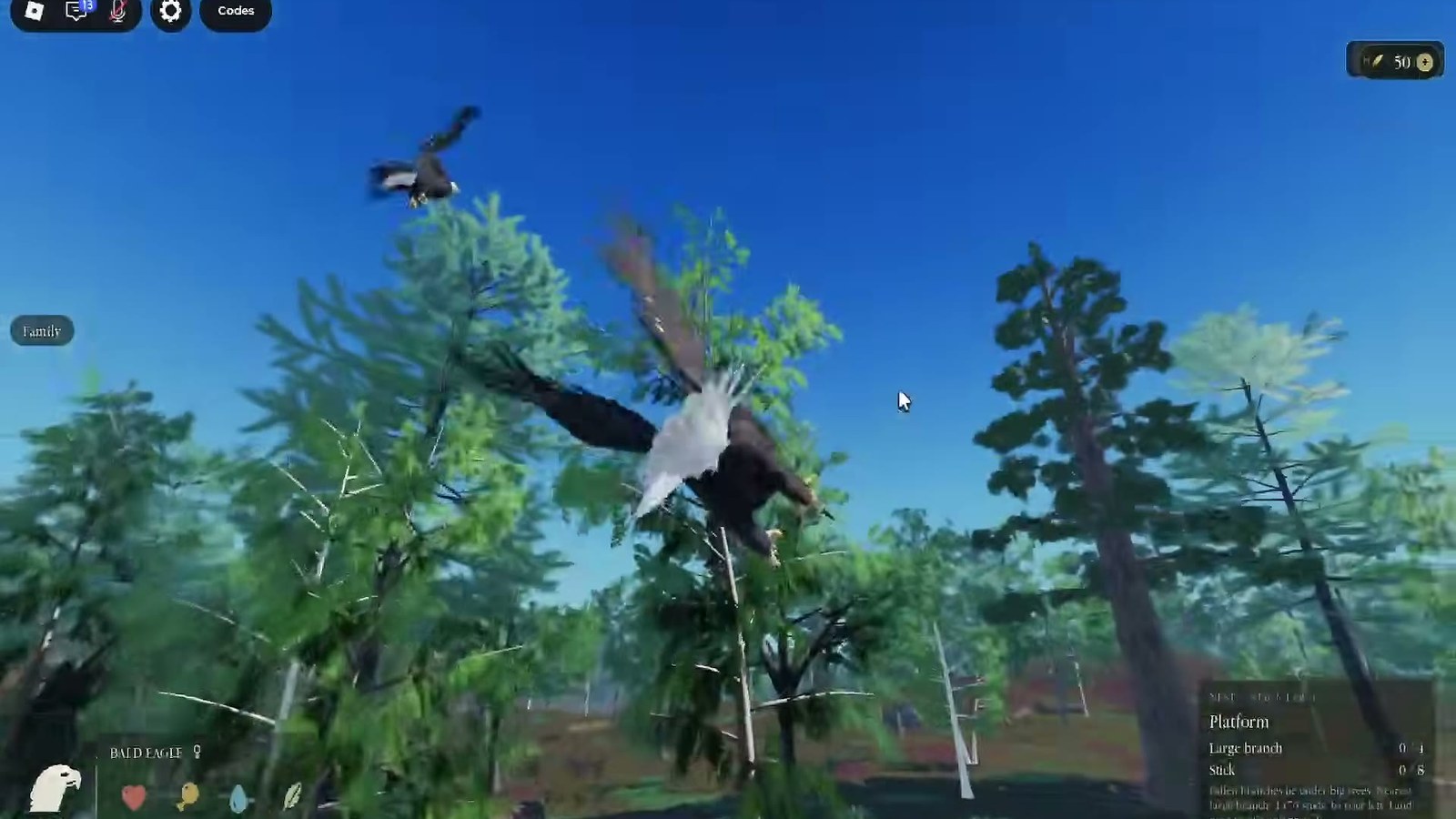
The waiting phase is where players get bored and make mistakes. There is no shortcut and no item that skips it, so the useful thing to do is prepare: know the shortest route to water, know where the chicks can fall, and make sure at least one adult is on the nest when the egg turns.
What the nest needs while an egg is there
An egg does not need much, but the site does. Three practical requirements:
- A stable perch for the sitting adult. If the parent cannot land cleanly, the egg is unattended more than it should be.
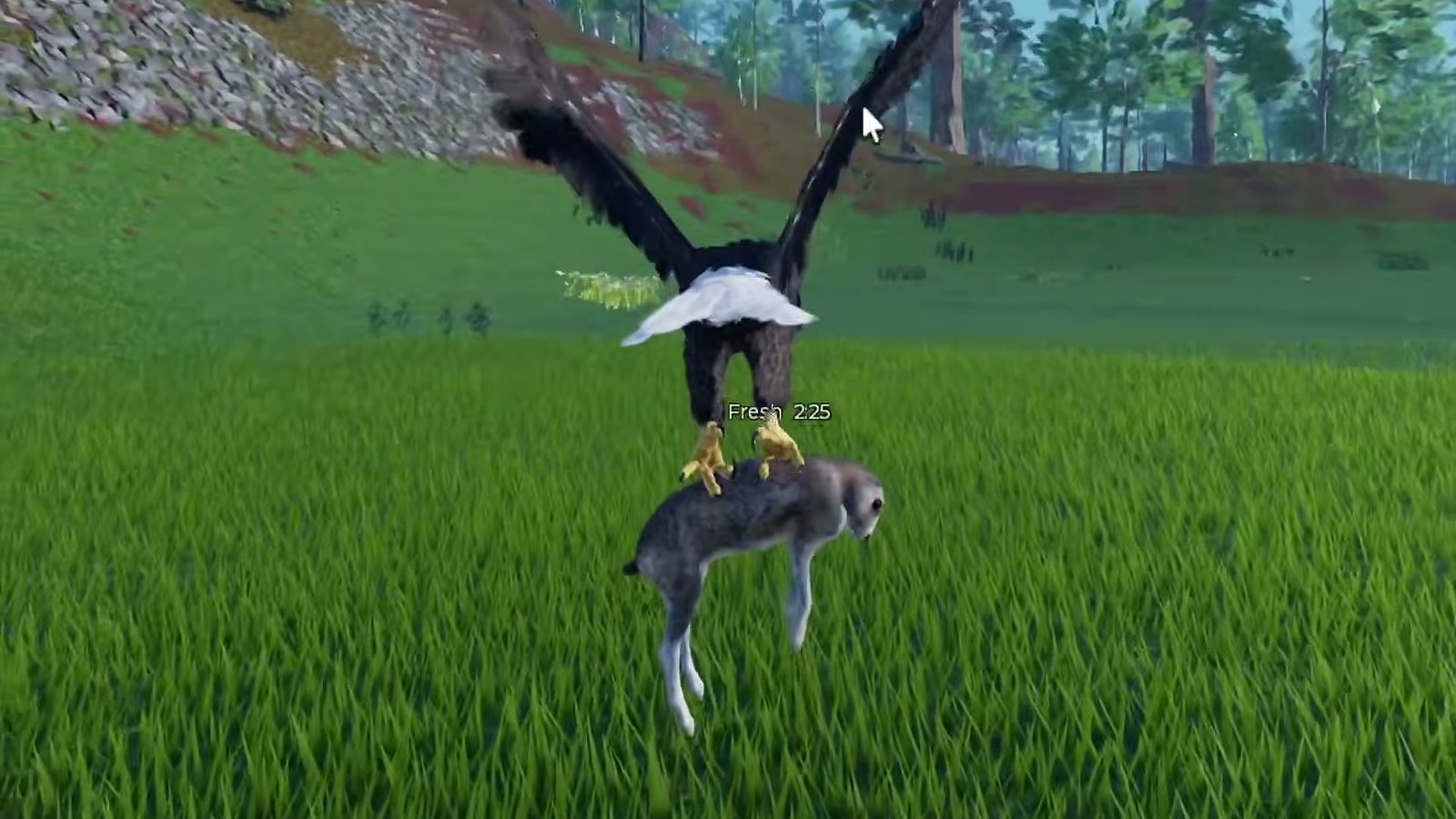
- Food within a short glide. A parent that has to cross the valley for every meal leaves the clutch alone for minutes at a time.
- A rim the chicks cannot immediately fall over. Newly hatched birds are small; a shallow open nest is a fall waiting to happen.
That is the practical argument for a canopy fork or a ledge over a waterline scrape: the first two give a rim and a perch, the third gives convenience and nothing else.
Hatching: what actually changes
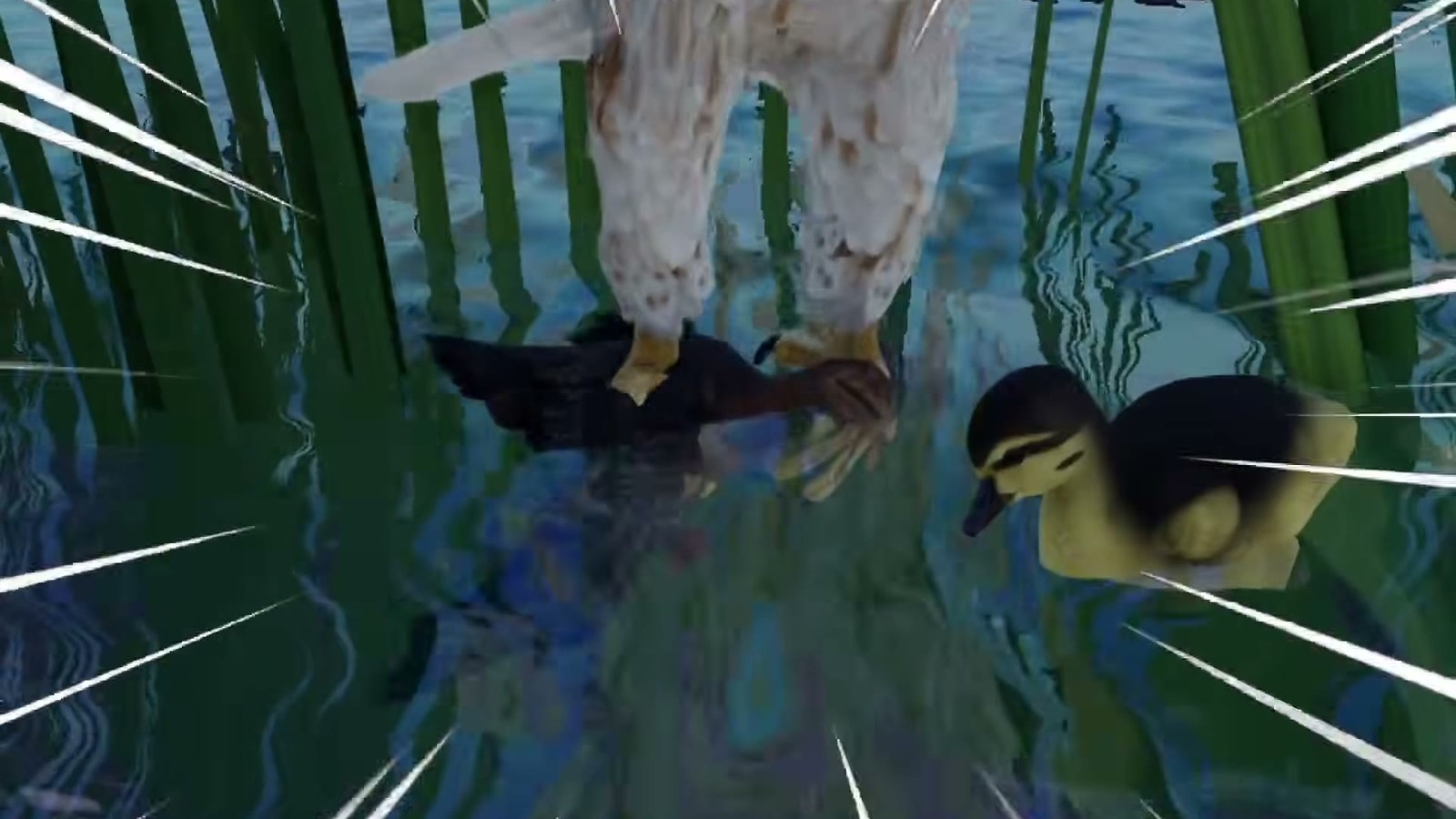
When the egg hatches, the family gains a chick - and on a public server that chick may be another player. This is the part that surprises people coming from single-player survival games: the reward for the egg stage is not a stat boost, it is a new participant in the loop.
That changes how you should behave at the hatch. A player-chick needs a moment to work out where it is; if the parents immediately fly off hunting, the chick is alone in a strange nest with no idea which way the water is. Stay, feed it once, and let it follow you to the nest edge before you leave.
Why clutches fail
| Failure | What it looks like | Prevention |
|---|---|---|
| Nest unattended | Egg sits with no adult nearby for long stretches | Split roles before the egg, not after |
| Food shortage | Parents both hunting, chicks calling with nothing arriving | Short hunting trips, nest close to water |
| Bad site | Chicks fall, parents crash on landing | Choose the site before the clutch |
| Abandonment | Family breaks up mid-clutch | Agree on a session length before you start |
None of these are game mechanics you can fail at once; they are all organisational. Broodwing does not punish you for a bad nest with a message, it just makes the next hour harder.
Preparing for your first clutch
If you have never raised a clutch, do this in order:
- Build and live in a nest for a session with no egg. Learn the approach and the route to water.
- Pair with someone who plays at the same time you do. A clutch with one active parent is a clutch that starves.
- Stock the nest before the egg: know where the nearest fish are and how long the round trip takes.
- Decide who stays. The guard is not the less important role; it is the role that keeps the egg alive.
Eggs, chicks and the rest of the site
Once the egg hatches, the raising chicks page takes over: feeding, guarding and the routine that gets a chick to its first flight. If you have not chosen a site yet, nest building compares the four options. And if you are still working out where the water is, the valley map is the fastest way to learn the landmarks you will fly in the dark.
For the dated side of the game - which patch added the barn owl colours, when Black Swan arrived - the release timeline has every change since 21 October.