Hunting: fish, bunnies and everything edible
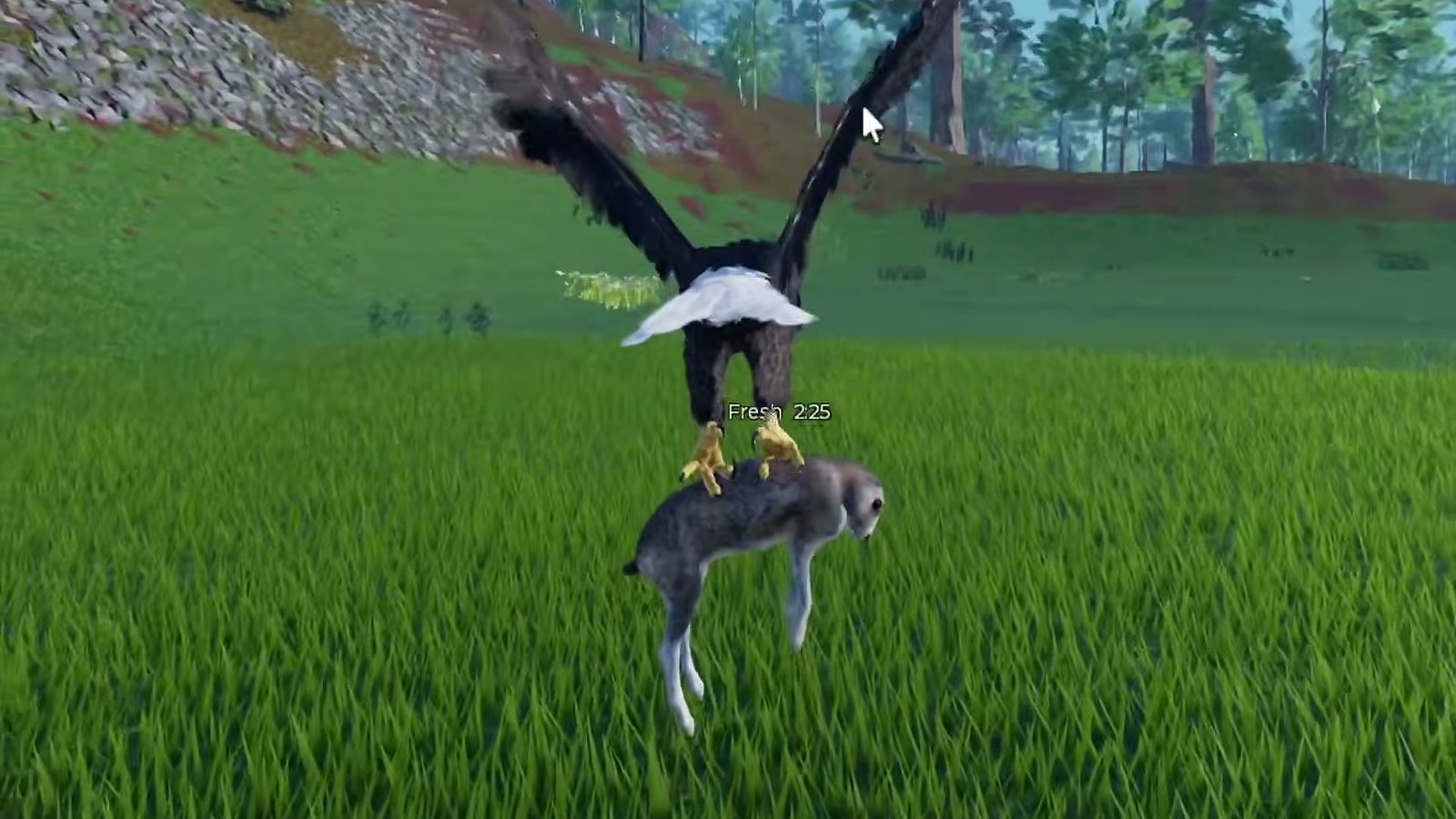
Fish come from the water and bunnies from the grass; dive to grab, climb immediately, and fly the shortest line back to the nest because a carried meal is the slowest part of the loop.
Broodwing keeps hunting deliberately narrow: the official description lists fish and bunnies, and those two are the whole food chain. That is good news for a new player, because it means there are only two hunting skills to learn and only two places to look. It is bad news for anyone who tries to hunt like a bigger survival game - there is no deer, no rare spawn and no recipe tree, so the skill is in the route, not the target list.
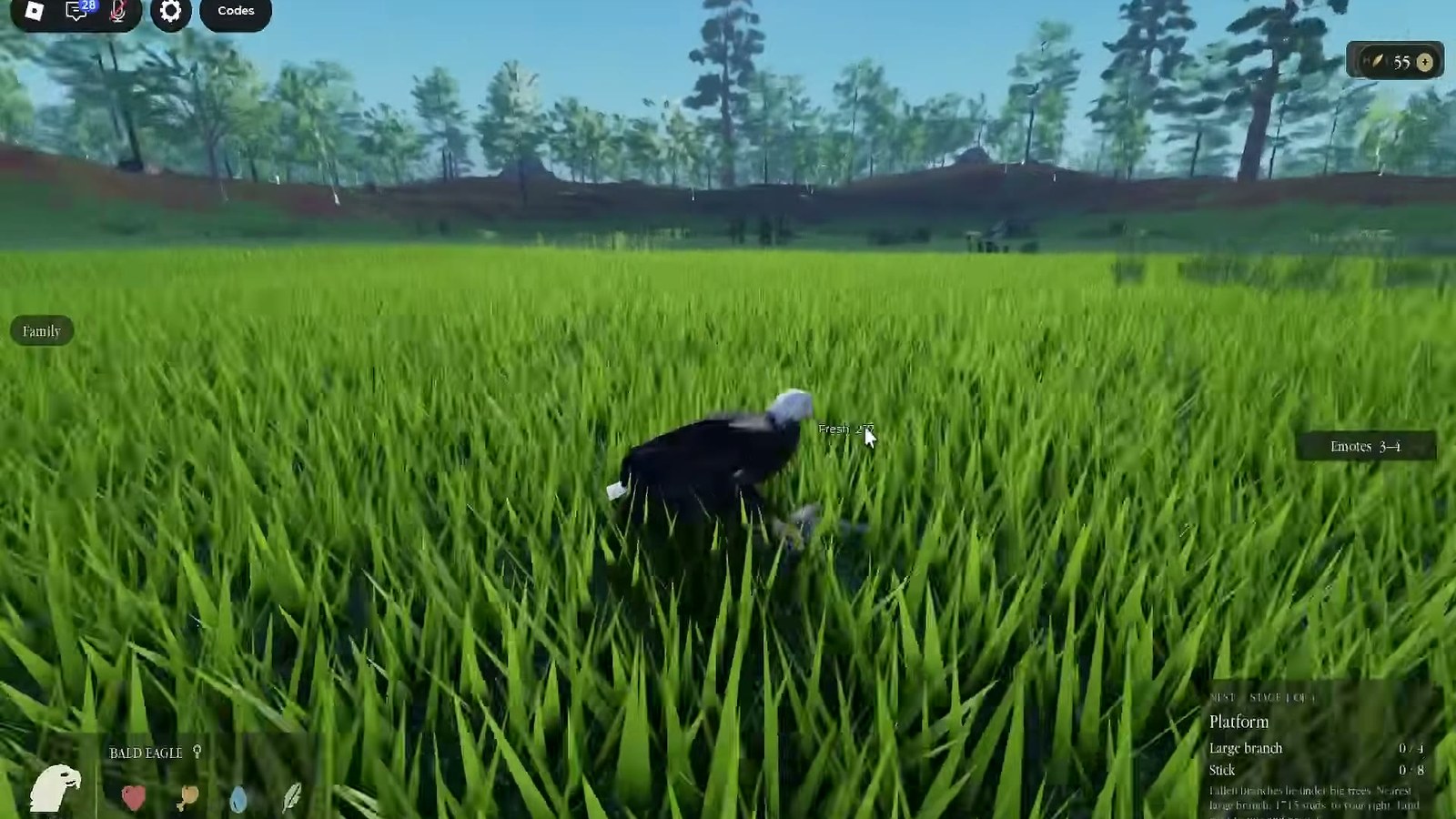
Fish: the reliable meal
Fish are in the water, and water is the easiest landmark in the valley to find and to keep in sight. The technique is a low pass rather than a dive: come in just above the surface with the wings level, take the fish on the way past, and climb immediately. A bird that turns along the waterline after a strike loses height over the water and ends up swimming, which costs more time than the fish is worth.
Three habits for fishing:
- Work the shallow edge first. It is where you can see movement and where a miss costs a short climb, not a long one.
- Strike moving outward, away from the bank, so your escape line is over open water rather than into trees.
- Never fish with an empty height budget. If you arrive low, circle once to gain altitude before the pass.
Fish are also the food you can carry home most safely, because the route from pond to nest is usually open air. That makes them the default meal for chicks.
Bunnies: the fast meal with a small window
Bunnies are on the grass, which means they are visible from a long way up and they can be gone before you arrive. The working technique is a high approach and a steep drop: circle above the open grass until you see movement, then commit downward in one line rather than drifting lower and lower hoping to get close.
| Prey | Where it is | How to approach | Risk | Carrying it home |
|---|---|---|---|---|
| Fish | Pond and shallows | Low pass, wings level, strike outward | Ending up in the water after a miss | Easy: open air, short climb |
| Bunny | Open grass and clearings | High circle, then one steep dive | Missing the strike and landing in the open | Medium: you land where you strike |
| Ground scraps | Around nests and paths | Walk up and take it | Almost none, small value | None, eaten on the spot |
The mistake players make with bunnies is the slow descent. Every metre you drop while circling tells the prey - and every other bird - where you are going. Pick the target from height, dive once, and if you miss, climb away and reset rather than chasing along the ground.
Feeding chicks versus feeding yourself
An adult can eat wherever it catches something. A chick cannot, so the food has to travel. That changes the calculation completely: a fish you eat at the pond is worth one meal, but a fish you carry to the nest is worth one meal plus one chick that grows and stops depending on you.
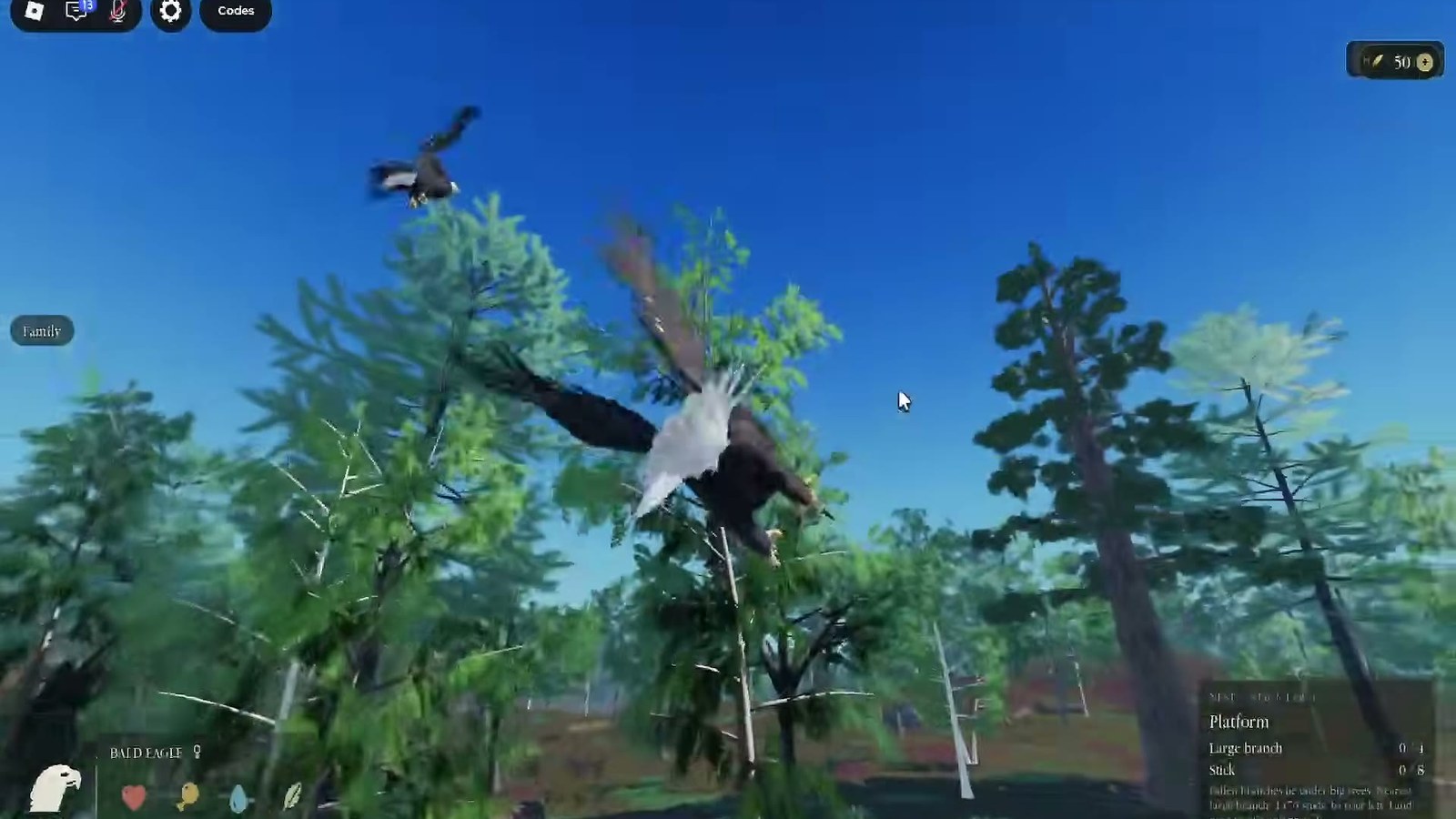
Carrying food is the slowest part of the loop and the most dangerous, because a bird with a load cannot climb as fast. Two rules keep it manageable:
- Take the shortest line from water to nest, not the prettiest one. Every extra turn over open ground is a chance to be intercepted.
- Dry your route before you need it. Fly the pond-to-nest line once with nothing in your claws so you know where you can climb if something comes at you.
Hunting as a pair
Two birds hunt better than one in a specific way: one works the prey and one watches. The watcher does not need to do anything clever - it stays high, keeps the hunter in sight, and calls out when another bird is lining up on the same water. On a 35-player server there is usually someone else fishing the same pond, and the pair that knows where everyone is eats more.
Pairs also make the return trip safer. One bird carries, the other flies above it; a bird approaching a loaded carrier has to deal with the escort first. If you are raising chicks, this is the most efficient arrangement in the game: hunter, carrier and guard are the same two players taking turns.
When the hunt fails
Every hunt fails sometimes, and the recovery matters more than the technique. If you miss a fish, climb away from the water and reset from height rather than circling low - a low circle over the pond is how a bird ends up wet, tired and hungry.
If the pond is crowded, move along the bank instead of fighting for the same patch. The valley has more shoreline than players, and a quiet stretch twenty metres away is worth more than a contested strike in the middle.
If you cannot find bunnies, stop looking from height and watch the tree line instead. Prey moves along cover, and a bird that watches where the grass meets the trees finds more than one that scans the middle of a field.
Food and the family economy
In a family, food is the currency. Chicks cannot contribute, so every adult meal is a decision about whether to eat now or feed the nest. The healthy split is roughly one trip for you to every two trips for the chicks while they are small, then evening out as they grow and start catching their own.
The raising chicks page covers the nest-side routine in detail, and the eggs and hatching page explains what has to be in place before there are mouths to feed. If you are still learning the map, the valley map shows where grass, canopy and water sit relative to each other - which is really a map of where your next meal is.