Raising chicks
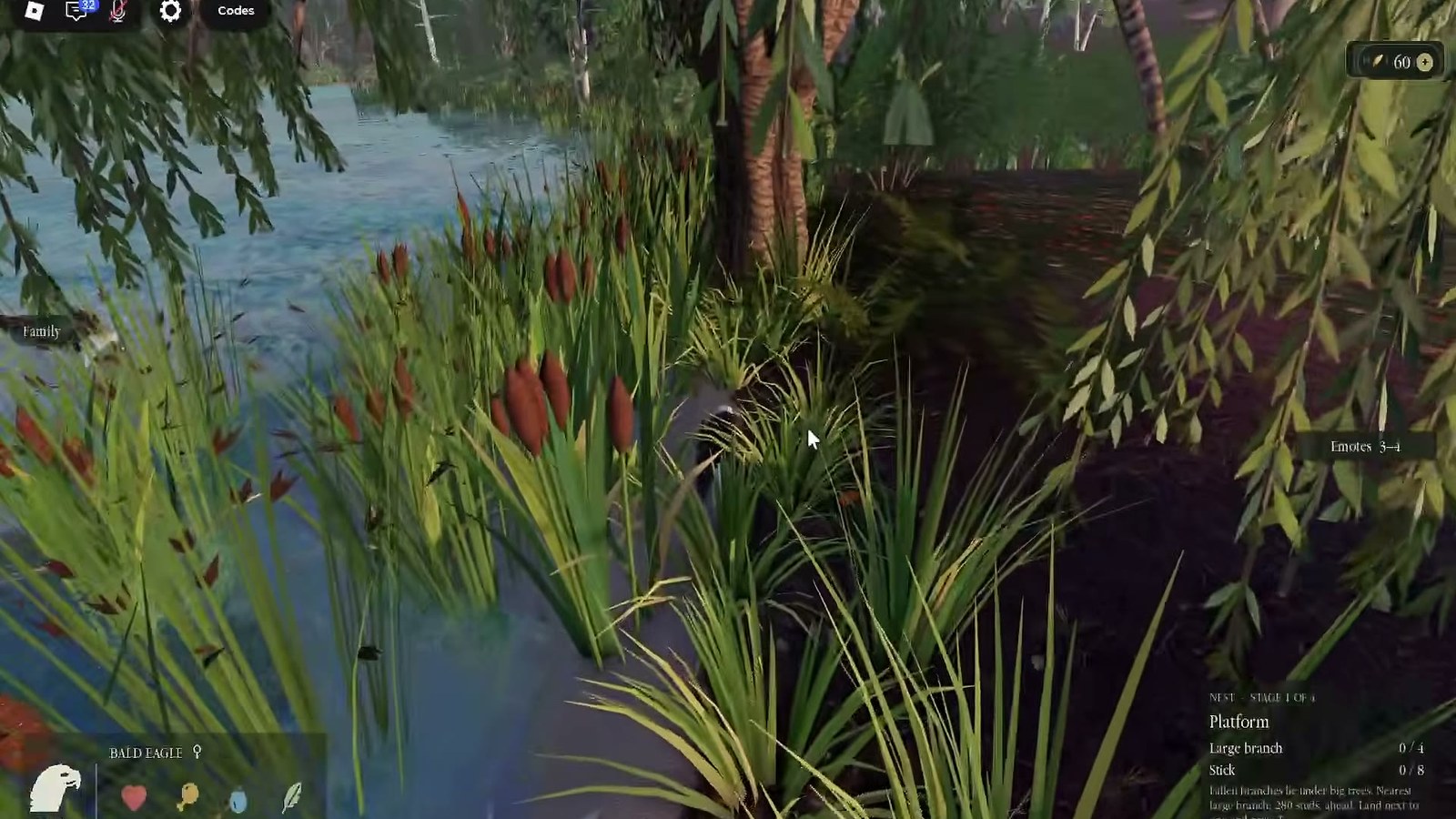
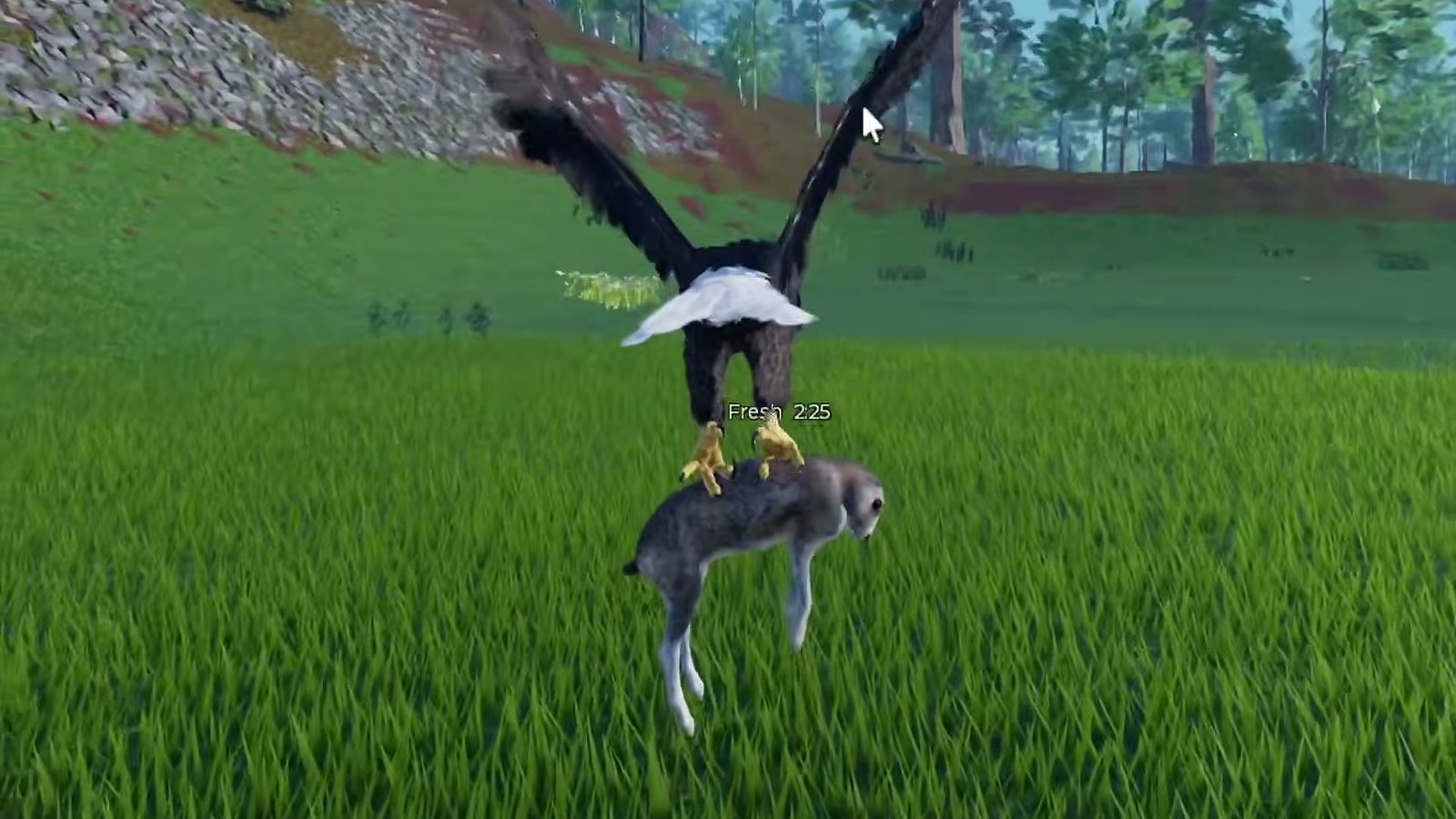
One adult stays near the nest while the other hunts; chicks eat at the nest, not on the wing, so the fastest growth comes from short hunting trips and a nest close to water.
A chick is the most valuable and least capable thing in Broodwing. It cannot hunt properly, it cannot fly far, and it cannot survive being ignored. Raising one is mostly a logistics problem: food has to arrive at the nest, and somebody has to be there when it does. Get the logistics right and the chick grows; get them wrong and you spend the session watching a hunger bar.
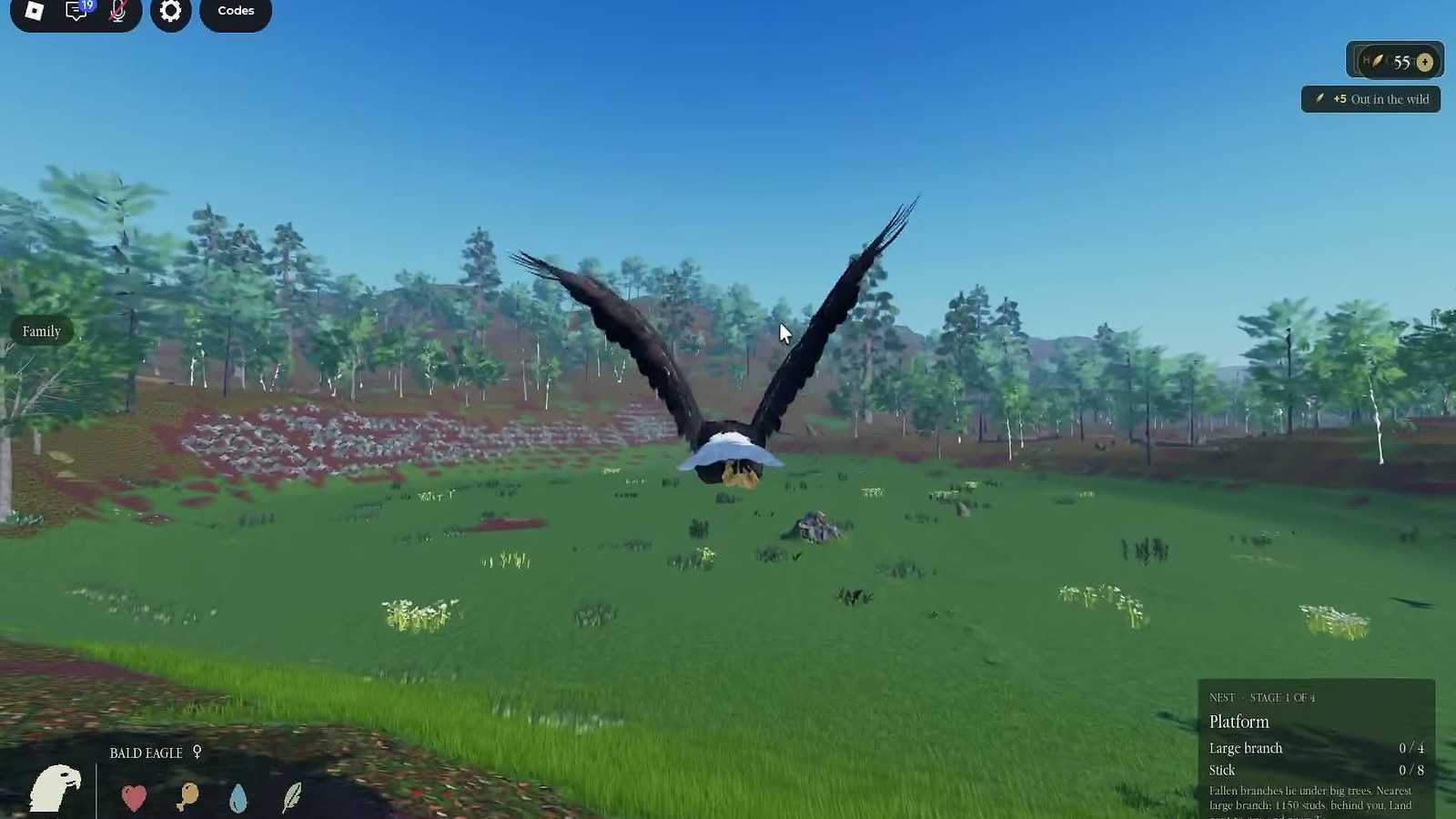
Who does what
A working nest has two jobs running at once: bringing food in and keeping the nest safe. One adult cannot do both well, which is why the family unit exists. The split that works on a public server is simple:
| Job | What it involves | Who should take it |
|---|---|---|
| Hunter | Fishing the pond, taking bunnies on the grass | The player with the best route knowledge |
| Guard | Staying at or above the nest, watching approach lines | The player who is happy to sit still |
| Carrier | Moving food from the catch to the nest | Whoever is closest when the hunter lands |
| Chick | Eating, staying in the nest, learning the edge | The newest player, or a roleplay alt |
Rotate the jobs between sessions, not within one. A hunter who swaps to guard mid-trip leaves a fish on the ground and a chick waiting.
Feeding: the actual mechanic
Chicks eat at the nest. That single fact drives everything: the food has to be brought to them, and the adult has to be at the nest at the same time as the food. A fish dropped at the pond feeds nobody.
The efficient rhythm is short trips. Fly to the water, take one fish, fly straight back, feed, repeat. It looks inefficient compared to a long hunting session, but the chick grows on meals delivered, not on prey caught. Two adults alternating short trips will out-feed one adult doing long ones every time.
The chick's side of the deal
If you are the chick, your job is to make yourself easy to feed and hard to lose.
- Stay in or on the nest until you can fly. Wandering to the ground as a chick means the food arrives where you are not.
- Learn the nest edge. Most chick deaths are falls, and a chick that knows where the drop is does not take it.
- Call when hungry, not constantly. A parent that cannot tell whether you have been fed will over-fly and burn out.
- Practise the hop. The short jump from the nest rim to the nearest branch is the first flight skill you will use as an adult.
The three phases a chick goes through
| Phase | What the chick needs | Who provides it | What changes next |
|---|---|---|---|
| Just hatched | Warmth, a first feed, a safe rim | Sitting parent | It starts moving around the nest |
| Growing | Regular meals, protection from above | Hunter plus guard | It can hop to nearby branches |
| Ready to fledge | Encouragement off the nest, a landing to aim at | Both parents, one at a time | It flies, and the nest stops being its whole world |
Players often try to rush the last phase. Do not: a chick that leaves before it can land will fall into the grass and need rescuing, which costs more time than waiting.
Protecting the nest
The threats to a chick are other players and the ground. Both are manageable with the same three habits.
- Keep the nest off the skyline. If you can see the nest from the middle of the valley, so can everyone else.
- Never leave the nest silent. A guard that is present but AFK does not deter anyone; a guard that moves around the site does.
- Land short, then walk. Coming in hot onto a nest with chicks in it is how you knock them out of it. Land a body length away and step in.
When a chick will not eat
If food is arriving and the chick is not growing, check the order of operations rather than the amount: the food has to be brought to the nest while the chick is there, and the chick has to be close enough to reach it. A chick on a branch above the nest, or on the ground below it, is in the wrong place.
The other common cause is a nest that is too far from water. Two adults flying a long round trip cannot deliver often enough, and the chick spends its day at the edge of hunger. Moving the nest closer to the pond is usually a bigger improvement than hunting harder.
Raising chicks with a roleplay group
Families that roleplay tend to give chicks a personality rather than a job, which is fine as long as the logistics still work. The trick is to let the roleplay happen at the nest and keep the hunting trips boring and short. A group that treats every feed as a scene will starve the chicks; a group that treats the nest as a stage and the pond as a chore will raise a clutch.
The family page covers group organisation, the eggs page covers what comes before the chick, and hunting and food covers the trips that keep the nest supplied.