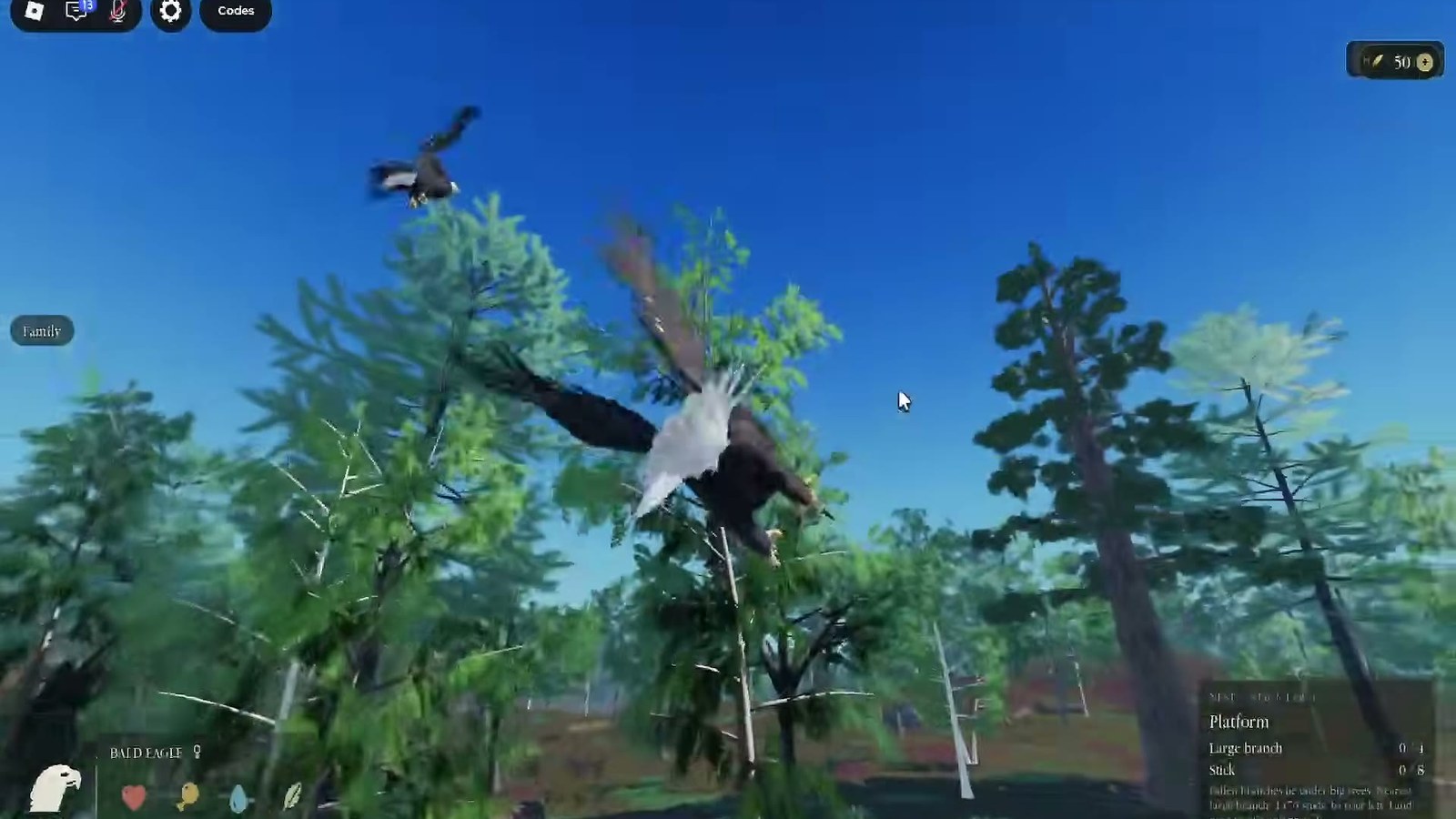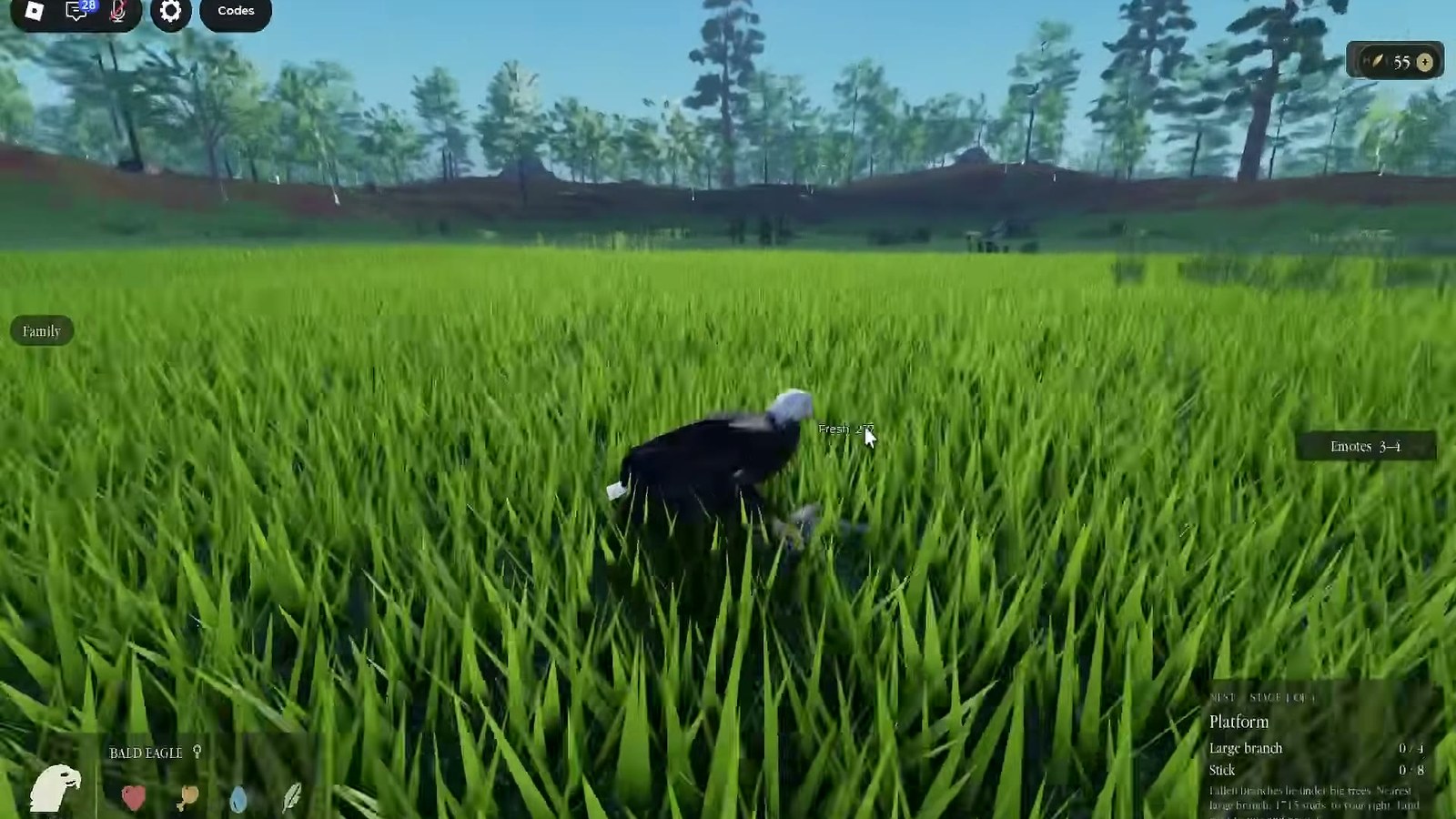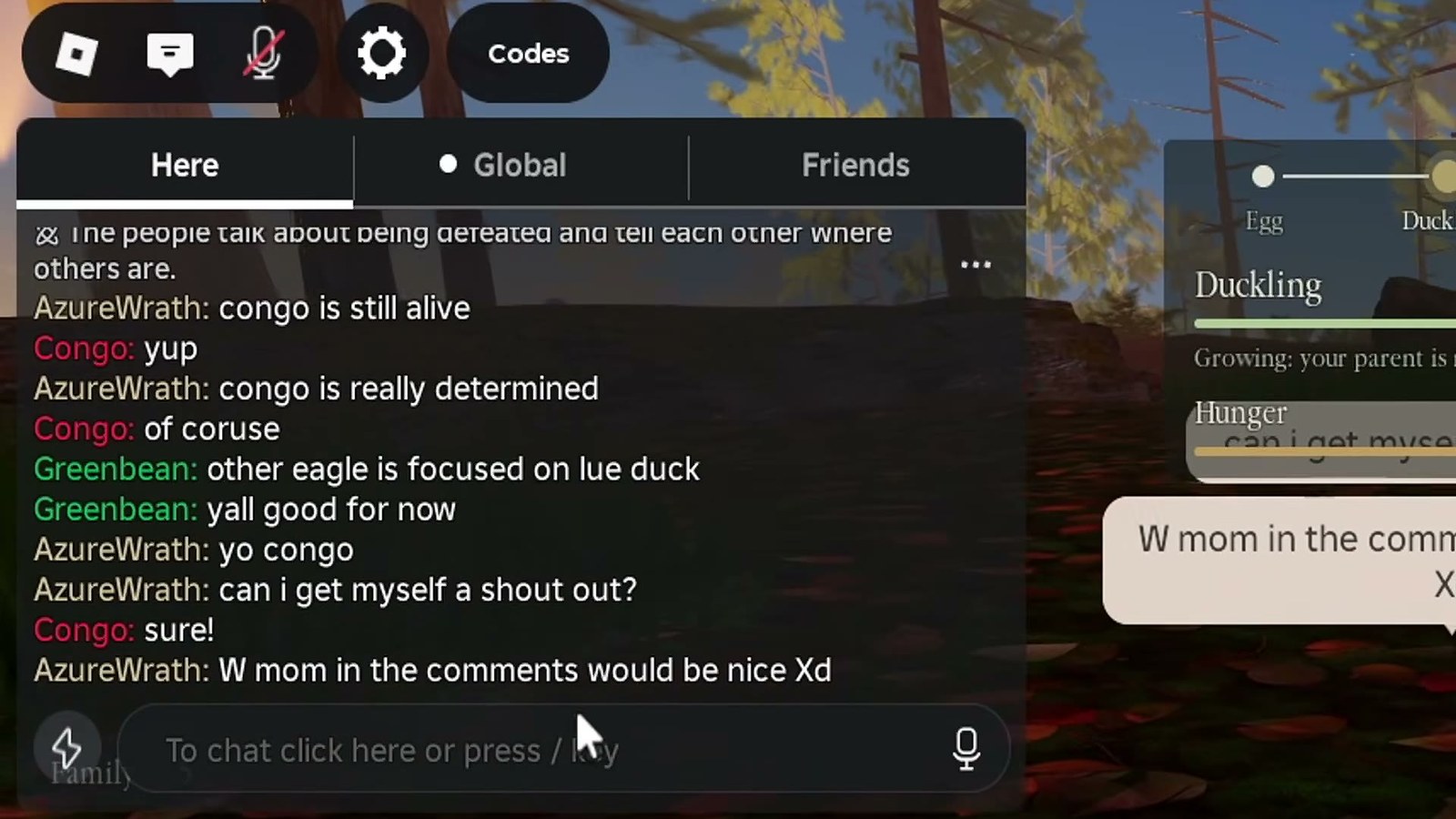
Family play and roleplay
Join an existing family or start one as a paired adult, then split roles: one hunter, one nest guard, and chicks that stay put until they fledge.
Broodwing is a survival game with a roleplay layer on top, and the family is where the two meet: it is the unit that raises chicks, and it is also the thing players organise themselves into when they want a story. Both uses are legitimate, and the families that last are the ones that do both at once - a group with a story and a food supply.
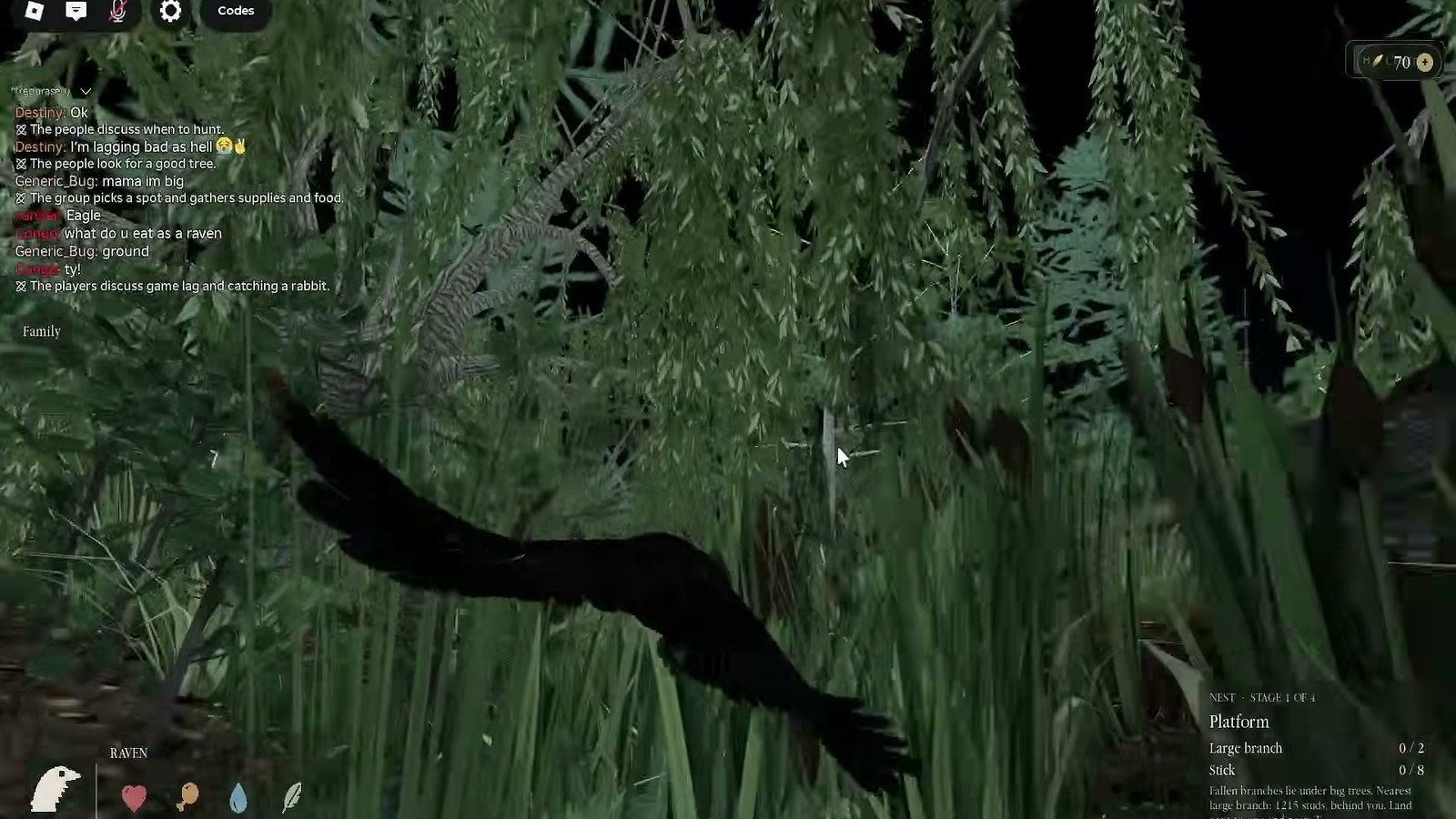
Joining a family
Joining is the easy part. On a 35-player server there are usually a handful of families at any time, and most will take a new bird who says what they can do. The mistake new players make is joining silently: a family that does not know you are there will not feed you, will not wait for you, and will assume you are a stranger when you land on the nest.
Say three things when you join: what bird you are, whether you can hunt, and whether you are staying for a while. That is enough for a family to give you a job.
The four jobs
| Job | What it is | Good for |
|---|---|---|
| Hunter | Catching fish and bunnies and bringing them back | Players who know the map |
| Guard | Watching the nest and the approach lines | Players who like being on station |
| Parent | Feeding and moving chicks, keeping the nest clean | Players who want the family story |
| Scout | Flying the valley, finding other families and empty sites | Players who like to explore |
A family with all four jobs filled is stable. A family of five hunters is a family that loses its nest the moment somebody finds it.
Splitting duty without arguing
The friction in Broodwing families is almost never about food; it is about who has to stay home. The fix is to schedule rather than negotiate: decide at the start of a session who guards for the first stretch and who guards after, and swap on a timer rather than on request.
Two habits make this painless:
- The guard is always the person with the least to lose. If someone is mid-hunt, do not ask them to come back and guard; ask the bird who is already at the nest.
- Swap at a natural break. After a feed, after a landing, after a death. Swapping mid-trip is how food gets dropped.
Roleplay that does not break the game
Roleplay in Broodwing works best when it lives at the nest and stays out of the hunting loop. Give the family a story - a territory, a feud with another nest, a chick that keeps wandering - and then run the normal survival routine underneath it. The story gives the session shape; the food keeps it alive.
Three patterns that work on public servers:
- The territory family. Pick a stretch of shoreline or a stand of trees and treat it as yours. Mark it by nesting there, not by chasing people off it.
- The big clutch. Several adults, one nest, lots of chicks. Chaotic, social, and the fastest way to learn the game because everyone is doing a different job.
- The pair. Two birds, one nest, minimal talk. The most efficient way to play and the easiest to organise with a friend.
Families and strangers
A public server means strangers, and strangers means both new players looking for a family and players who will raid a nest. There is no way to tell them apart at a distance, so the rule is simple: be generous at the nest and careful about where the nest is.
Generosity costs little - feeding a random chick is cheap and often turns into a family member. Carelessness costs the clutch, which is why the nest building page treats site choice as a family decision.
When a family breaks up
Families end for mundane reasons: someone's session ends, the nest gets raided, the chicks grow up and leave. The useful thing is to end cleanly: hand over the nest, say who has the food, and do not leave a chick sitting in a nest nobody is coming back to.
If you are the one leaving, take the chick with you for one flight to the water first. It is the single kindest thing an adult bird can do in this game, and it costs a minute.
Organising outside the game
Broodwing does not list an official Discord, so the practical way to organise a family is inside the game: agree on a server, agree on a nest site, and use the session itself as the meeting. The server and friends page covers how to land in the same server reliably, which is the only real prerequisite for playing with people you know.
For the survival side of family play, read raising chicks and eggs and hatching; for the map you will be defending, the valley map is the short version.
Your first ten minutes in a new family
Joining a family is quick, but the first ten minutes decide whether you are a member or a stranger who keeps landing on the nest.
- Say what bird you are and whether you can hunt. Two facts is enough for a family to give you a job.
- Ask where the nest is. A family with a nest you cannot find is a family you will lose.
- Take one job, not all of them. The player who says "I'll guard" is more useful than the player who says "I'll help".
- Feed something before you ask for anything. A fish delivered on arrival buys more goodwill than any introduction.
After that, the routine is the same as any family's: hunt, guard, feed, repeat. The raising chicks page has the detail on the feeding rhythm, and the server page covers keeping the group in one place.